Smart Aligners - Powered by Graphy Smart Aligners - Powered by Graphy
For dentists and orthodontic teams

A direct-printed workflow for orthodontist-led care.

SmartAligners is a doctor-directed clear-aligner system built around Graphy Tera Harz Clear shape-memory resin. Every case is planned by an orthodontist, with production checkpointed for review after approval.

37°CRecovery evaluated at oral temperature
Attachment-lightPressure features may reduce attachments in suitable cases
Direct printedApproved appliance geometry, not a thermoformed sheet
3-5 daysLocal production target after approved cases
The technology advantage

Direct printing puts wall thickness and pressure regions back in the prescription.

Thermoforming inherits whatever a stretched sheet leaves behind. Direct printing does not. The evidence and limits sit further down this page.

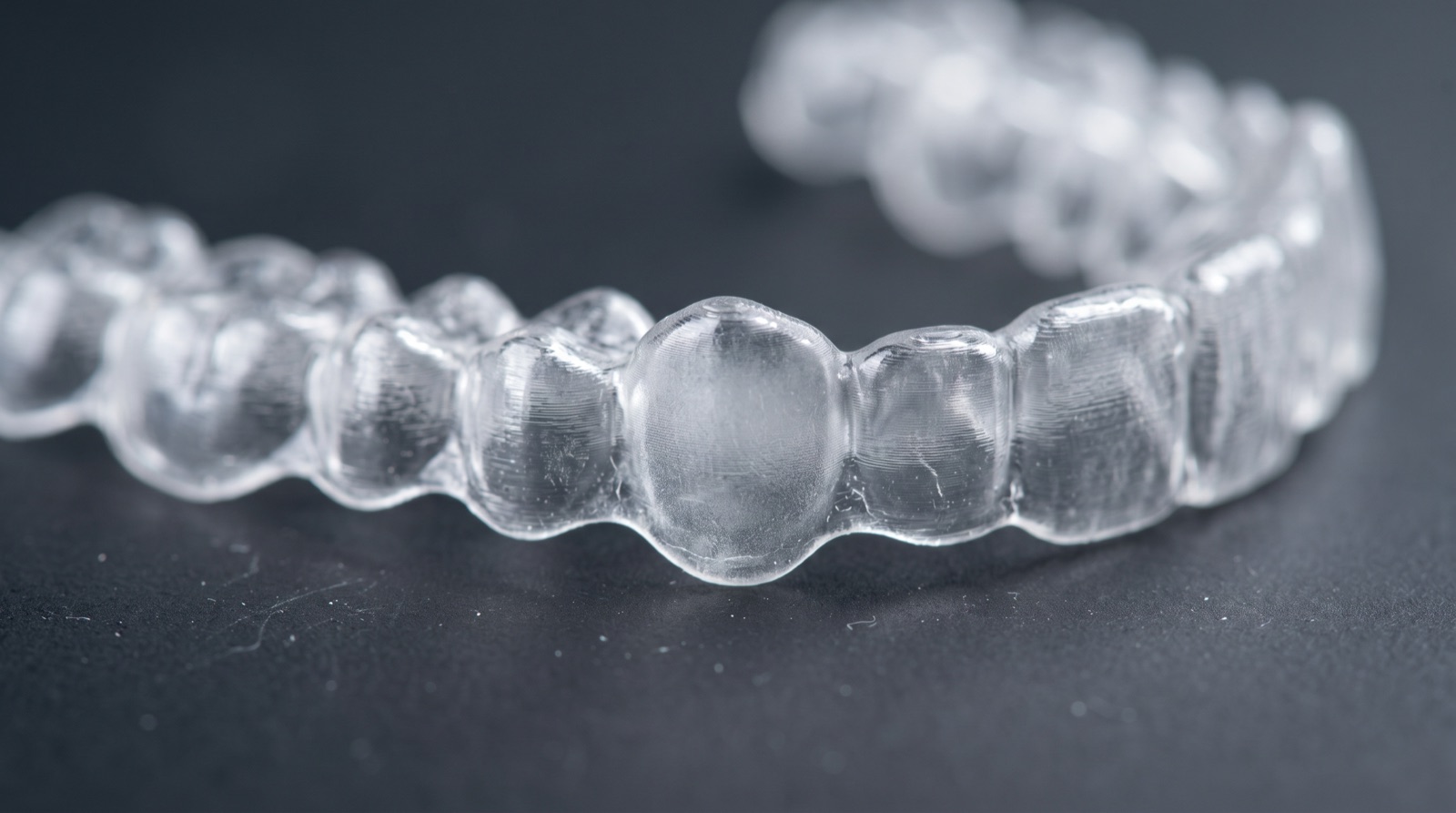
Direct-printed aligner showing a locally thicker pressure region against a thinner neighbouring wall
Where the clinician decides

Three release points stay with you.

  • Staging and geometryThe plan is approved as appliance geometry, not as a tray order.
  • Wall thickness and pressure regionsThickness can be varied locally and a pressure region shaped or filled where prescribed.
  • Release after inspectionFit and tracking can be reviewed before the next stages are committed.
Our plans

Three plan levels. The clinician confirms the fit.

Smart Essential, Smart Complete and Smart Advanced are our plan levels. The guide describes up to 10, 20 and 30 stages respectively, with package ranges of roughly 2-3, 4-6 and 7-10 months. Diagnosis, staging, refinements and compliance still determine the prescribed duration.

Essential up to 10 stages2-3 mo
Complete up to 20 stages4-6 mo
Advanced up to 30 stages7-10 mo
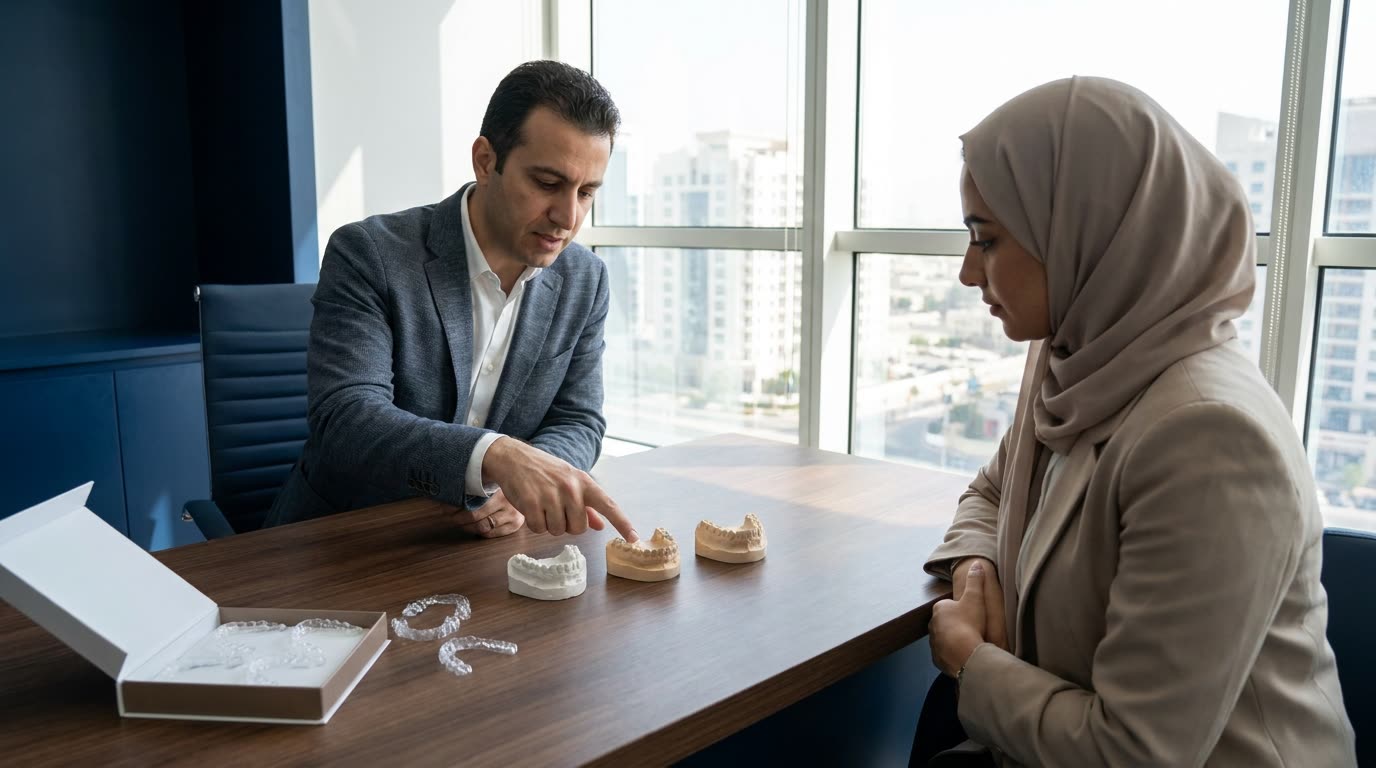
A clinician and colleague reviewing staged treatment models and clear aligners
From the clinical guide

Scan, approve, then release a staged batch.

The treating clinician still owns diagnosis and review. Production starts only after approval.

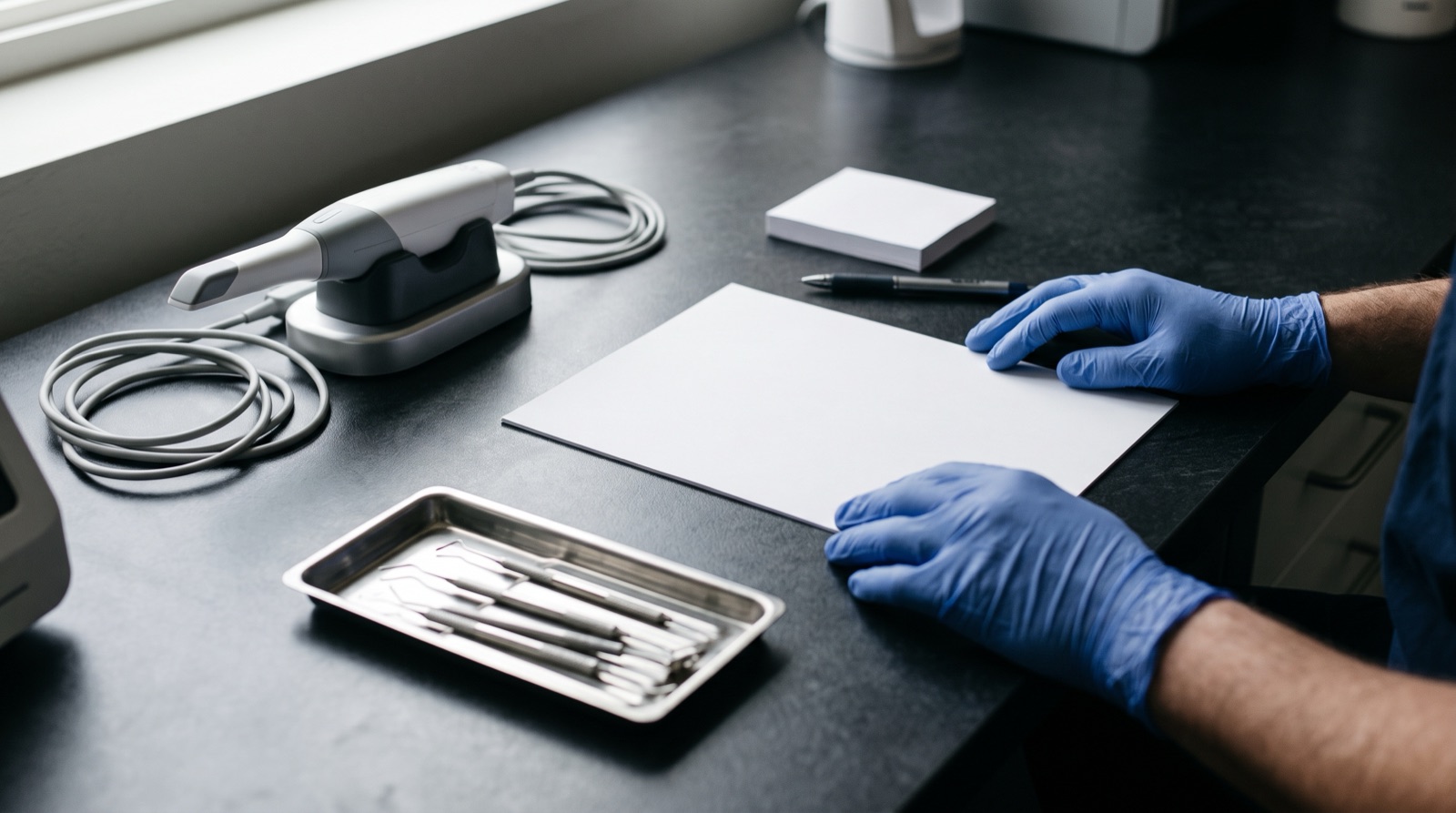
Intraoral scanner docked beside a prescription sheet and instrument tray, ready to accompany the uploaded scan
UploadScan sent with prescription and comments.
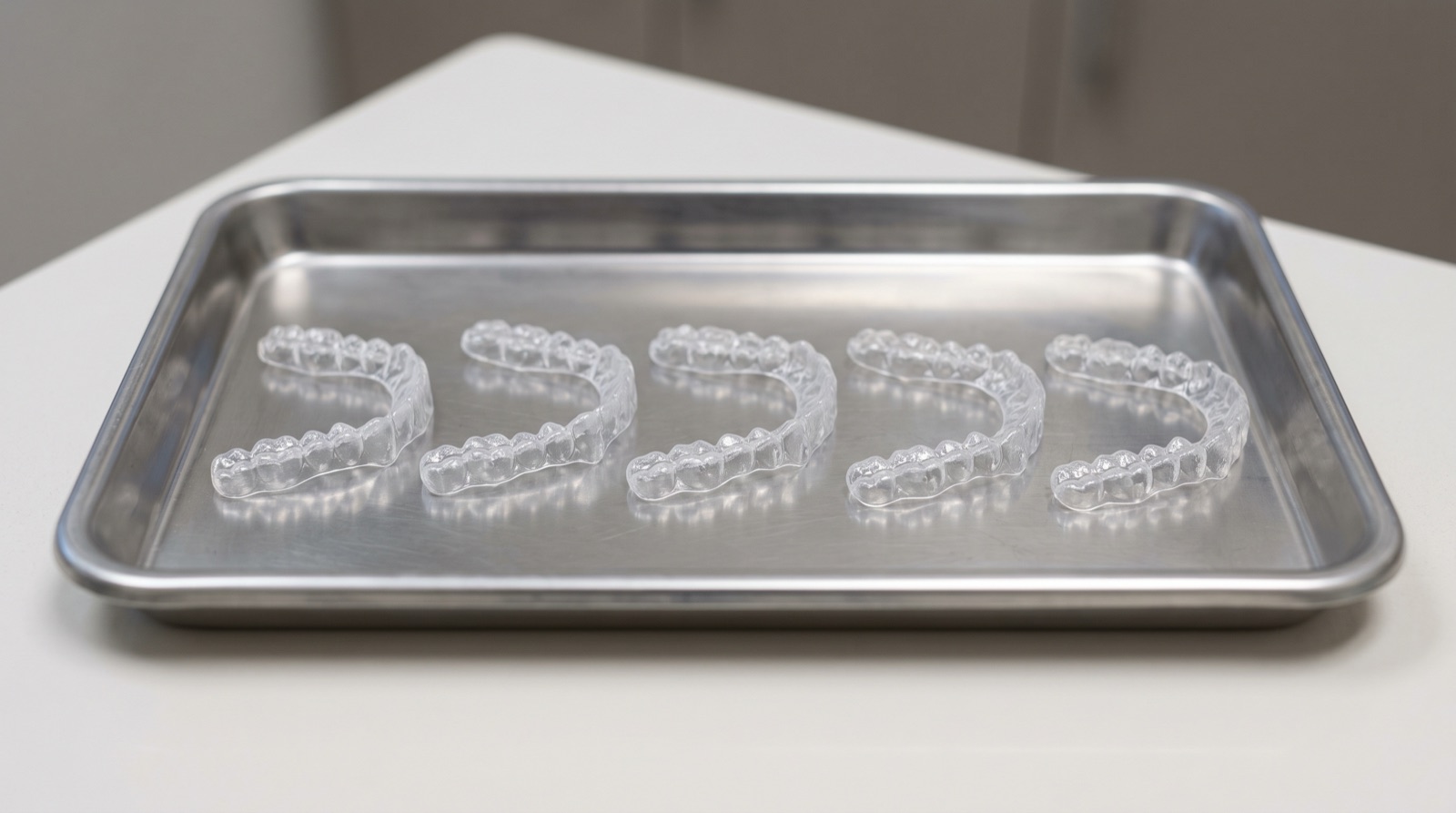
Five direct-printed aligners from a staged batch arranged in a production tray
DeliverCheckpointed batches make fit and tracking visible before the next release.
Case workflow

Scan. Upload. Plan. Approve. Deliver.

  1. 01Scan

    Digital dentition, checked for suitability.

  2. 02Upload

    Scan sent with prescription and comments.

  3. 03Plan

    A staged plan comes back for review.

  4. 04Approve

    Production starts once you approve it.

  5. 05Deliver

    Finished appliances reach the clinic.

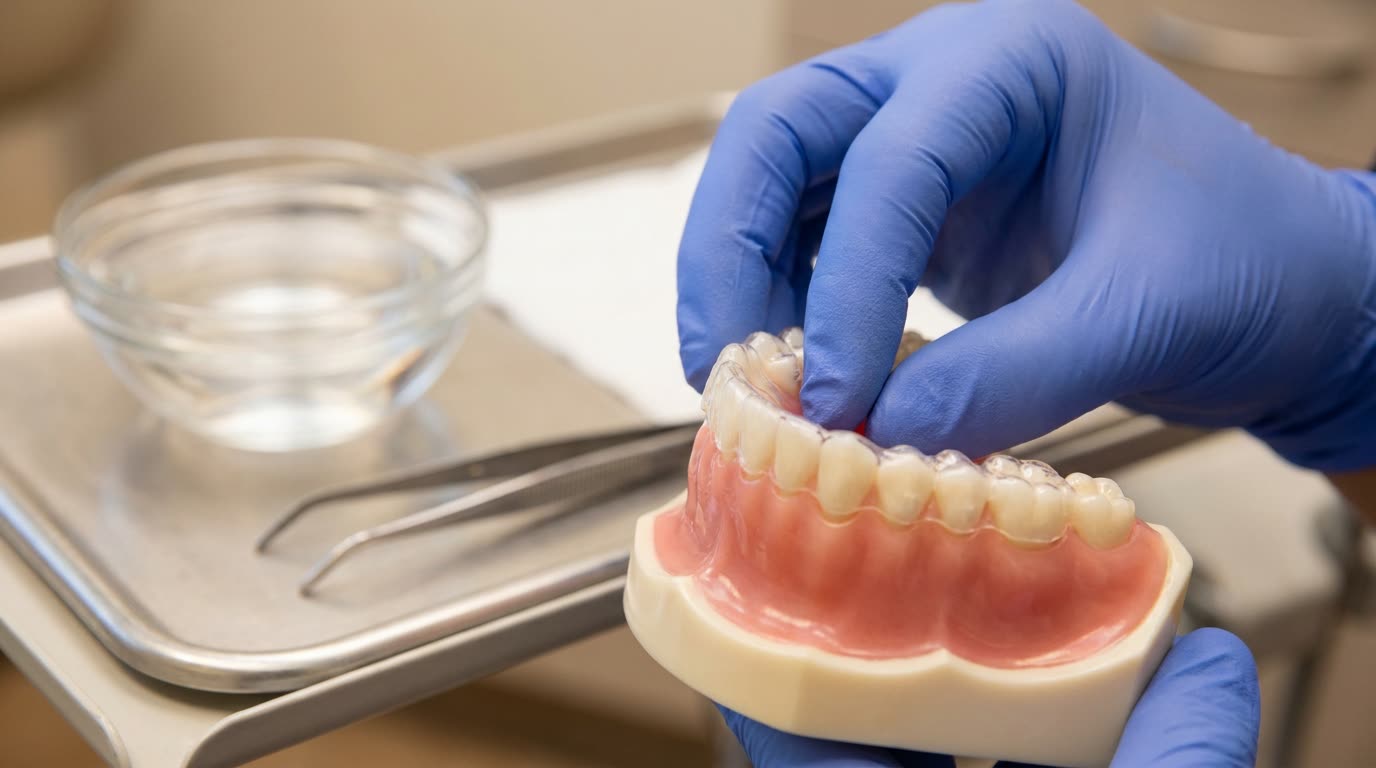
A clinician pressing a warmed clear aligner flush onto a dental training model
Chairside delivery

Warm, place, press, settle.

  1. 01Warm

    Soften the aligner in the approved warm-water protocol until temporarily flexible.

  2. 02Place

    Guide the softened appliance straight onto the teeth.

  3. 03Press

    Seat each tooth and seal the cheek- and tongue-side edges.

  4. 04Settle

    Allow the appliance to cool and firm while checking fit and high spots.

Patient talking points

Wear and sequencing

  • Wear for the prescribed hours; the guide uses 22 hours a day as the target.
  • Move to the next set on the clinician’s schedule and do not skip ahead.
  • Soften a new aligner in warm water before seating when instructed.
Daily care

Keep fit and hygiene on track

  • Rinse before insertion and brush gently with a soft toothbrush.
  • Brush teeth, gums and tongue after meals before replacing the appliance.
  • Ask the clinic for guidance if a tray is lost, broken or symptoms feel severe.
Practice advantage

Make review time count

  • Checkpointed batches make fit and tracking visible before the next release.
  • Planned pressure features may reduce auxiliaries in suitable movements.
  • Fewer avoidable corrections can protect chair time without replacing clinical judgment.
Two clinicians reviewing an upper-arch digital plan together at a clinic workstation
Case portal

Submit a case, track it to delivery.

Upload the intraoral scan and prescription, review the orthodontist-led plan, approve it, and follow production checkpoints in one place.

SmartAligners Doctor Portal · Partner Clinic Edition Dr. Tariq (Demo Clinic)
Portal / Active Cases / SA-DEMO-004
Outstanding balance: AED 0.00 · Batch billing active
1 Not Submitted Started in clinic, awaiting scan submission.
1 Needing Your Review Staged 3D plan waiting for clinical sign-off.
0 Submitted for Design In orthodontic CAD staging with lab.
2 Delivered Printed, QC inspected and dispatched.
Case SA-DEMO-004 Patient A · synthetic record

The staged 3D plan is ready. Production does not start until you approve it.

Needing Your Review
What's next: Review the staging in the treatment plan viewer, verify tooth movement velocities, then approve or return with clinical revisions.
Contact SmartAligners clinical support ↗

Files, Messages, and Batches are clickable case views. Open Files first to check what has arrived.

Submitted notes lock once a case is in production. After that, changes are requested as a revision rather than edited silently.

Product Type
SmartAligners Direct Complete
Arch to Treat
Upper and lower arch
Treatment Plan
Staged plan, 18 stages (0.20mm/step)
Notes for the Lab
Avoid attachments on upper laterals. Patient prefers slower staging.
Interactive 3D treatment plan viewer

Rotate, zoom and step through this synthetic case with the same 3D viewer used elsewhere on this site. It is a clearly illustrative demonstration, not the live per-patient staging simulator.
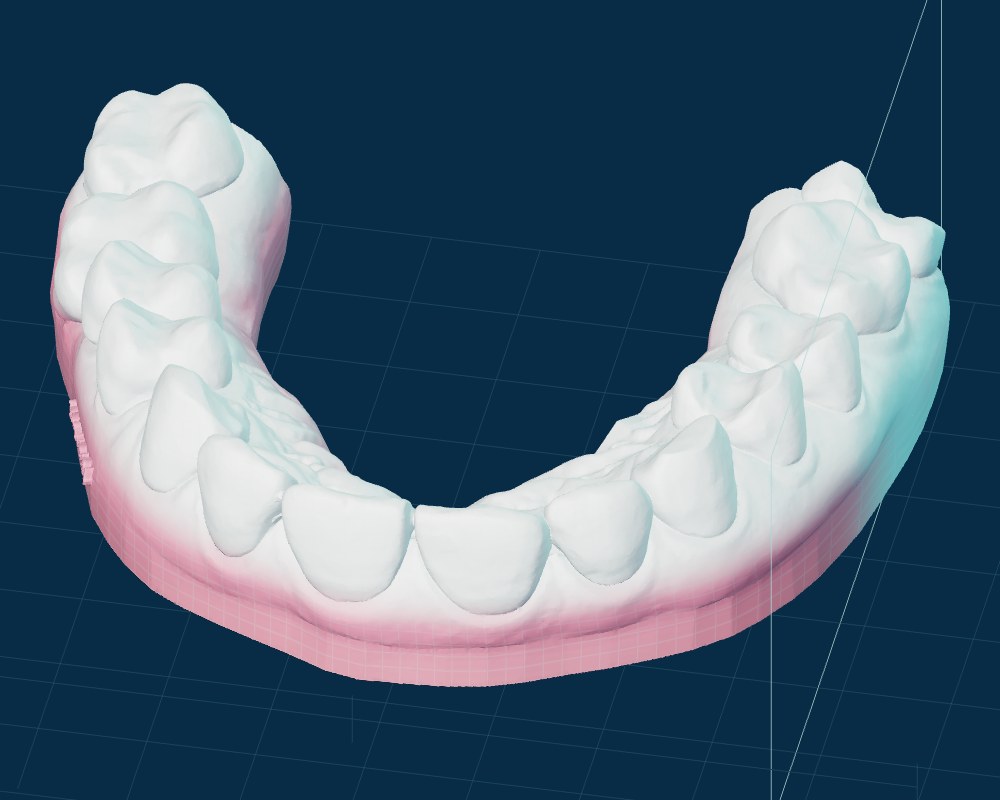
Upper-arch scan model with a seated clear aligner, shown for this synthetic case.
Status Awaiting Doctor Approval
Share 3D Plan with Patient · Disabled in this demo

Files are grouped by clinical function rather than one general upload box. Each slot shows whether it has been received.

Facial Photos 2/3
  • Full face, smiling (JPG)Uploaded
  • Full face, not smiling (JPG)Uploaded
  • Profile, not smilingNot uploaded
Intraoral Photos 4/4
  • Upper occlusal (JPG)Uploaded
  • Front view (JPG)Uploaded
  • Lower occlusal (JPG)Uploaded
  • Side occlusion (JPG)Uploaded
X-Rays 1/2
  • Panoramic (DICOM)Uploaded
  • CephalometricNot uploaded
Intraoral Scans 2/2
  • Upper arch (STL · 14.2 MB)Uploaded
  • Lower arch (STL · 13.8 MB)Uploaded

The portal keeps a case-scoped conversation with the lab and design team, plus a delivery history of system emails.

  • Design Team (Orthodontist) Message Staging adjusted to avoid attachments on upper laterals per prescription. Review rotational velocity on tooth 12.
  • System Notification Delivered Intraoral STL scans verified and registered. 0 mesh anomalies detected. Case SA-DEMO-004 ready for clinical approval.

Production is tracked as numbered batches, so staging can be released and checked in groups.

  • Batch 1 (Stages 1 to 6)
    6 direct-printed aligners · Upper & Lower · Resin TC-85
    Sent to printer
  • Batch 2 (Stages 7 to 12)
    6 direct-printed aligners · Scheduled upon progress checkpoint
    Scheduled
Request a mobile scan

SmartAligners can dispatch an intraoral scanner and certified clinical technician directly to your clinic in Dubai, Abu Dhabi, or Sharjah. In the portal this submits a dispatch request; here the form is shown as a capability and cannot be sent.

Patient namePatient A (Synthetic)
Clinic operatoryRoom 2 - Partner Clinic
Preferred dispatch windowTomorrow morning (09:00 - 12:00)
NotesFull dual arch scan with buccal bite
Dispatch mobile scanner · Disabled in this demo
Evidence preview

What the material evidence actually says.

96.1% Shape recovery at 60 minutes TC-85 specimens returned toward their printed geometry in a 37 °C bath (N = 6). Recovery is a material property, not tooth movement.
4.65% Tensile elastic limit Strain at yield before permanent deformation in a 25 °C tensile test, against 3.92% for a PETG thermoforming sheet in the same test.
9 ISO 10993 tests on record The biological evaluation battery for Tera Harz Clear, each with a laboratory report number you can request.

For your case discussion: these describe how the material behaves on a bench, not how a given tooth will move. They are useful for explaining how a printed appliance recovers toward its printed shape at mouth temperature. They are not a substitute for your own diagnosis, staging or review.

Material behaviour

Force that keeps working, not force that fades.

A thermoformed sheet is stretched to shape, so it starts to relax from the moment it is seated. Tera Harz is printed in its target geometry and keeps returning to it at mouth temperature. This is the measured difference.

96% of the deformation recovered at 60 minutes, 37 °C
0% recovery from PETG under the same conditions, it held its deformed shape
Shape recovery of TC‑85 at 37 °C over one hour N = 6 · bending angle falls from 177° to 6.9° as the specimen returns to its printed form
Measured values
Elapsed Bending angle Recovery
0177.00 ± 1.44°0
10 s146.27 ± 3.92°17.36 ± 2.06%
30 s107.23 ± 7.05°39.42 ± 3.90%
1 min79.43 ± 6.45°55.12 ± 3.64%
5 min31.53 ± 5.48°82.19 ± 3.09%
10 min20.32 ± 5.49°88.52 ± 3.10%
60 min6.90 ± 2.68°96.11 ± 1.50%

Recovery ratio θinitial − θt θinitial × 100

Why activation at body temperature matters

The useful distinction is not that the polymer can change shape. It is that recovery continues in the temperature range where the aligner is actually worn.

  • Warm water briefly increases flexibility, which reduces the effort needed to seat a tight tray.
  • Recovery toward the printed geometry is what generates the corrective action, rather than residual stress in a stretched sheet.
  • Repeated-cycle testing supports recovery as a material property, not a one-time event.
  • Stage timing and warm-water instructions stay under your control.
Safety testing

Nine tests, and what each one returned.

Tera Harz Clear, the material SmartAligners are printed from, was submitted against the ISO 10993 battery for biological evaluation of medical devices. Laboratory report numbers are listed so a clinician can request the underlying certificates.

ISO 10993 biological evaluation results for Tera Harz Clear
Number Test Standard Result Report no.
1 Cytotoxicity Elution method ISO 10993-5 Non-cytotoxic to L-929 mouse fibroblast cells BIO-GNT 1384
2 Sensitization GPMT ISO 10993-10 Non-sensitizer to guinea pig skin BIO-ATX 3190
3 Irritation Acute oral mucosa ISO 10993-10 Oral mucosal irritation index concluded as zero BIO-ATX 3191
4 Intracutaneous reactivity Polar and non-polar extracts ISO 10993-10 Non-irritant to rabbit skin BIO-ATX 3192
5 Acute systemic toxicity IV and intraperitoneal, 50 mL/kg ISO 10993-11 No systemic toxicity observed BIO-ATX 3193
6 Subacute systemic toxicity Repeated administration ISO 10993-11 No gross or microscopic changes BIO-CTX-606
7 Subchronic systemic toxicity Repeated administration ISO 10993-11 No gross or microscopic changes BIO-CTX 362
8 Genotoxicity Bacterial reverse mutation ISO 10993-3 Non-mutagenic at 100% extract concentration BIO-GNT 1385
9 Genotoxicity In vitro chromosomal aberration ISO 10993-3 Non-clastogenic with and without metabolic activation BIO-GNT 1386

Biocompatibility describes how the material behaves in contact with tissue. It is not a measure of treatment effectiveness, and it is not a prediction of any individual outcome. Source: Graphy shape-memory aligner science summary, safety section.

Performance and literature

Evidence at three levels: fit, material stability and clinical use.

Fit

Dimensional accuracy

3D scan analysis reports greater trueness and precision for direct-printed aligners than the thermoformed comparison. A printed aligner is measured against the file it came from; a thermoformed one is measured against a sheet that was stretched over a model.

Material

Behaviour over 14 days

After 14 days in 37 °C water, the printed resins delivered 4.04 to 7.24 N at 1% strain, against 26.26 to 32.91 N for thermoformed sheets in the same test (Oyonarte et al., Scientific Reports 2026).

Clinical

Published case reports

Shape-memory aligner cases are published in the peer-reviewed literature, including Schupp et al. in the Journal of Aligner Orthodontics. Protocols and outcomes vary by case; the papers are linked below rather than summarised into a claim.

Primary sources and evidence context
Peer-reviewed · laboratory studyThermo-mechanical properties of 3D printed photocurable shape memory resin for clear aligners2022
Authors
Lee SY, Kim H, Kim HJ, et al.
Published in
Scientific Reports 12:6246
What it supports here
Source of every shape-recovery and elastic-range figure on this site, including the 96.1% recovery at 60 minutes and the 4.65% vs 3.92% elastic limits.
Read the original
doi:10.1038/s41598-022-09831-4
Peer-reviewed · in-vitro studyForces and moments generated by 3D direct printed clear aligners of varying labial and lingual thicknesses during lingual movement of a maxillary central incisor2023
Authors
Grant J, Foley P, Bankhead B, et al.
Published in
Progress in Orthodontics 24:23 (2023)
What it supports here
Supports the statement that selectively changing printed thickness changes the measured force system. It is an in-vitro measurement on one tooth, not a treatment outcome.
Read the original
PubMed 37423974
Peer-reviewed · critical reviewClinically Relevant Properties of 3D Printable Materials for Intraoral Use in Orthodontics: A Critical Review of the Literature2023
Authors
Goracci C, Juloski J, D'Amico C, et al.
Published in
Materials 16(6):2166 (2023)
What it supports here
The reason this site describes the clinical evidence base as developing rather than settled. Cited wherever a direct-print claim is qualified.
Read the original
PubMed 36984045
Manufacturer informationGraphy: Shape Memory Aligner Workflow2026
Authors
Graphy
Published in
Manufacturer workflow documentation
What it supports here
Source of the manufacturing route steps and the RPA/CPR pressure-region comparison. Manufacturer material, not independent evidence.
Read the original
graphysma.com/sma-workflow
Laboratory test batteryISO 10993 biological evaluation of Tera Harz Clear (nine tests)Undated
Authors
Graphy / contract laboratories
Published in
Report numbers BIO-GNT 1384 to 1386, BIO-ATX 3190 to 3193, BIO-CTX 362 / 606
What it supports here
Supports the ISO 10993 biocompatibility statements on this site. Biocompatibility describes tissue contact only. It is not evidence of treatment effectiveness.

From approved digital plan to inspected appliance.

Direct printing removes model printing, block-out, thermoforming and border trimming from the conventional workflow. It does not remove the need for disciplined post-processing and clinical QC.

  1. 01 Clinical approval

    Scan, diagnosis, staging and appliance design reviewed by the treating clinician.

  2. 02 Direct printing

    Aligners printed from the approved digital appliance geometry.

  3. 03 Wash and cure

    Validated post-processing controls polymerization and finished material behaviour.

  4. 04 Finish and inspect

    Supports, edges, clarity, fit and batch records checked before release.
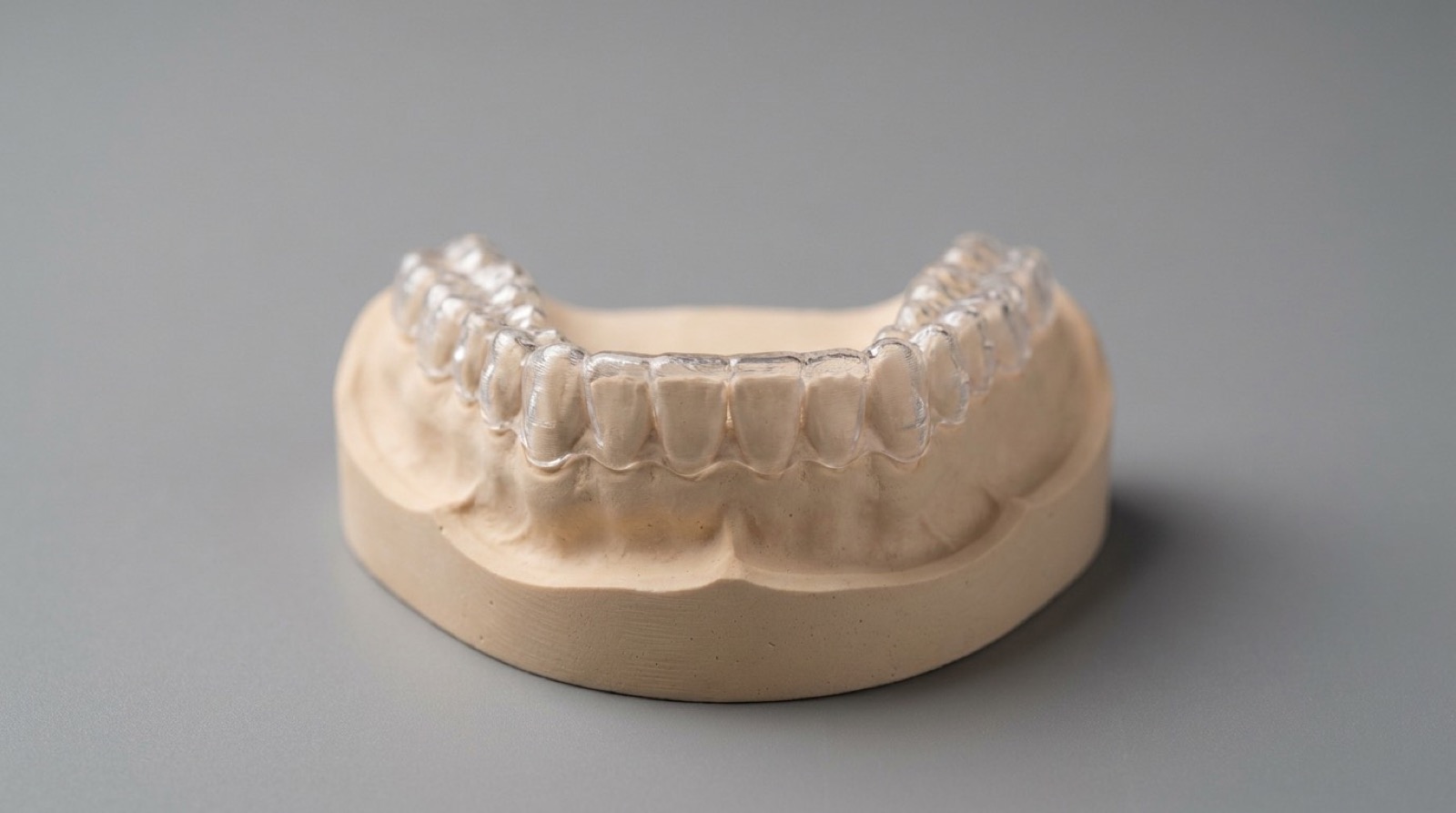
Clear aligner seated on an upper-arch model after finishing
Tracking

What tracking looks like in the occlusal view.

Upper and lower arch photographs from one treated case, taken before treatment and at the end of the approved plan.

Upper arch

Upper arch photograph before alignment
Before
Upper arch photograph after alignment
After

Lower arch

Lower arch photograph before alignment
Before
Lower arch photograph after alignment
After
Local production partner

D4 Dental Lab, Dubai

Office 303, Ahli House C, Al Nahda 2, Dubai. Monday-Saturday, 9:00 AM-6:00 PM.

SmartAligners coordinates local production through D4 after clinician approval of the digital plan. The laboratory workflow is designed around rapid UAE production targets for eligible cases, with staged 4-6 aligner batches available for progress checks when requested by the clinician.

More than a Lab. A partner in your smile.

SmartAligners main contact WhatsApp +971 52 671 1185 [email protected]

Go deeper

The source material, and the product page.

Every chart above is rebuilt from Graphy's characterisation data. If you would rather read the original figures, they are reproduced in full with the provenance stated.

  • Ten figuresBiocompatibility, shape memory, creep, accuracy and pressure regions
  • Provenance statedReproduced from Graphy's summary, with what is deliberately excluded and why
  • Papers linkedPublisher records rather than reproduced article pages
For dental professionals

Bring SmartAligners into your clinic.

Tell us about your clinic, team and interest in onboarding, clinical training or production. This partnership channel is separate from patient provider enquiries.

[email protected]

Partnership enquiry received

The SmartAligners clinical team will reply using the contact details provided.

WhatsApp SmartAligners