A clear-aligner system, printed directly.
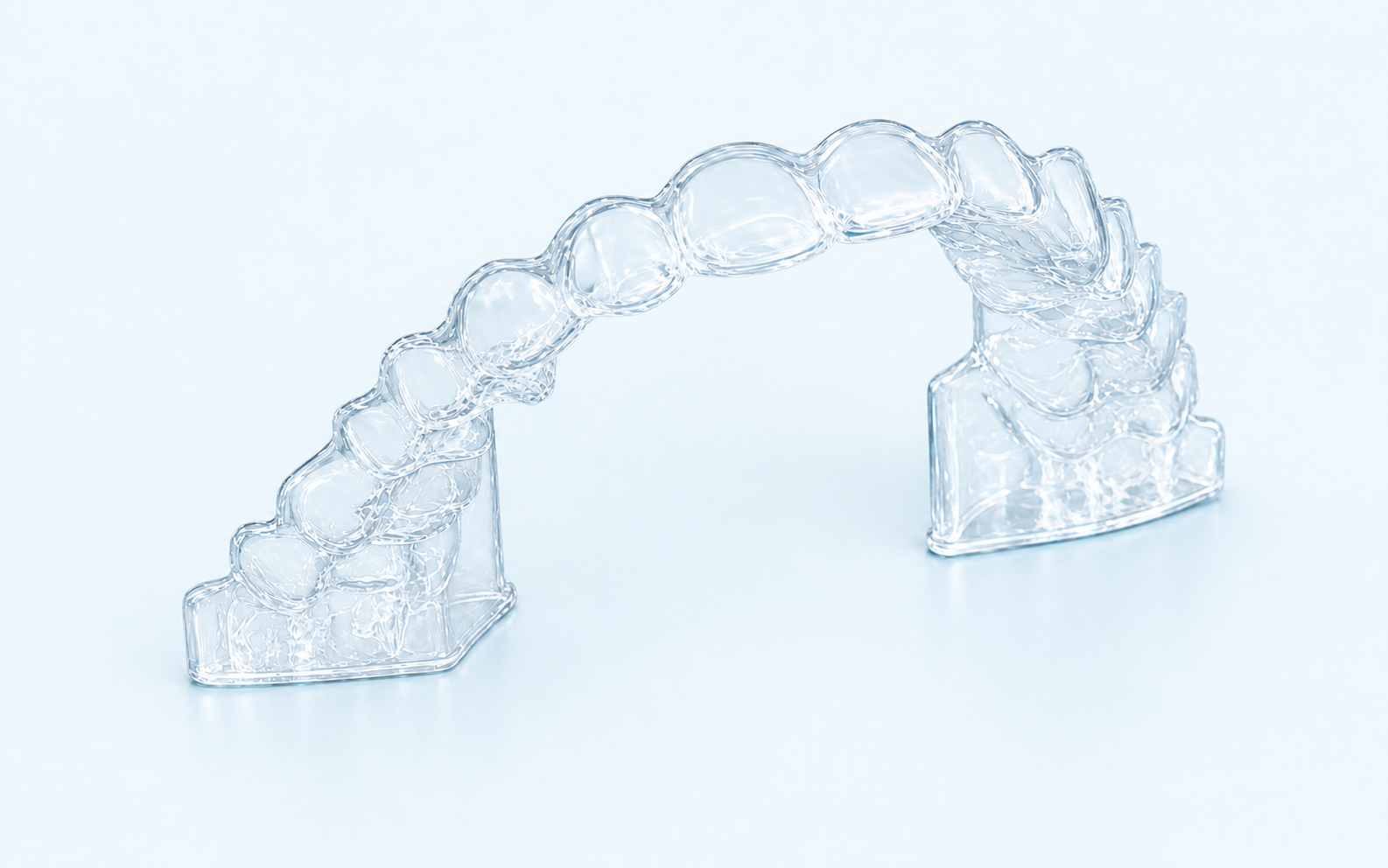
SmartAligners is a doctor-directed orthodontic system built around Graphy Tera Harz Clear shape-memory resin. The approved appliance geometry is printed directly rather than thermoformed over a model, then post-processed, fitted and monitored through a staged clinical plan.
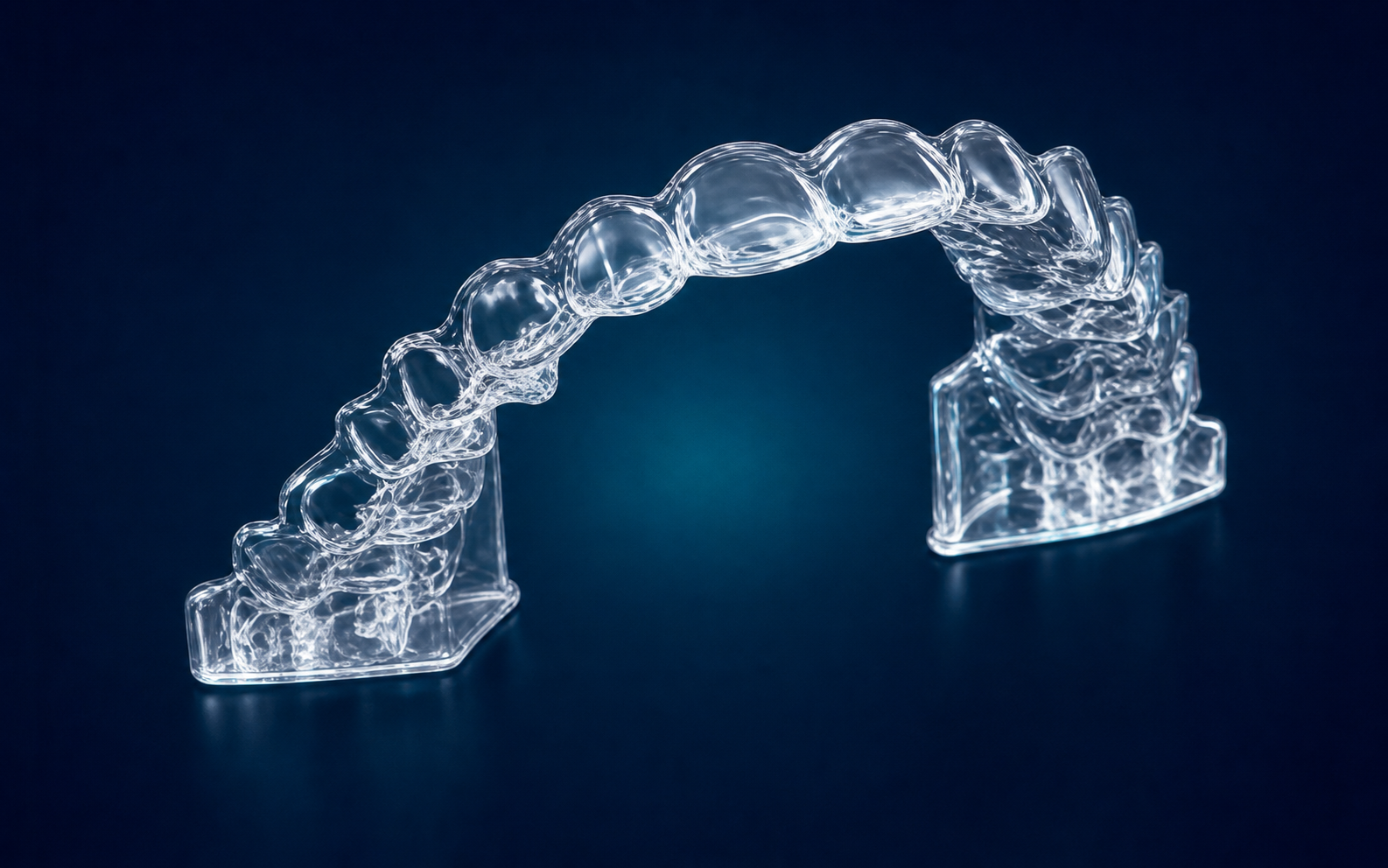 Graphy Tera Harz Clear
Discuss duration by package and case scope.
Graphy's published package guidance lists Lite at 4-6 months and Advanced at 7-10 months. Diagnosis, staging, refinements and compliance still determine the prescribed duration.
Independent patient guidance describes many clear-aligner cases in the 12-18 month range. Context only, not a matched comparative trial; case definitions and package scope differ. Graphy source ↗ Independent duration guide ↗
Shape memory tuned for the oral environment.
The appliance is briefly softened for seating, then recovers toward its printed geometry at mouth temperature. The scientific material below is reproduced from the supplied Graphy science summary.
Select any evidence image to enlarge it.
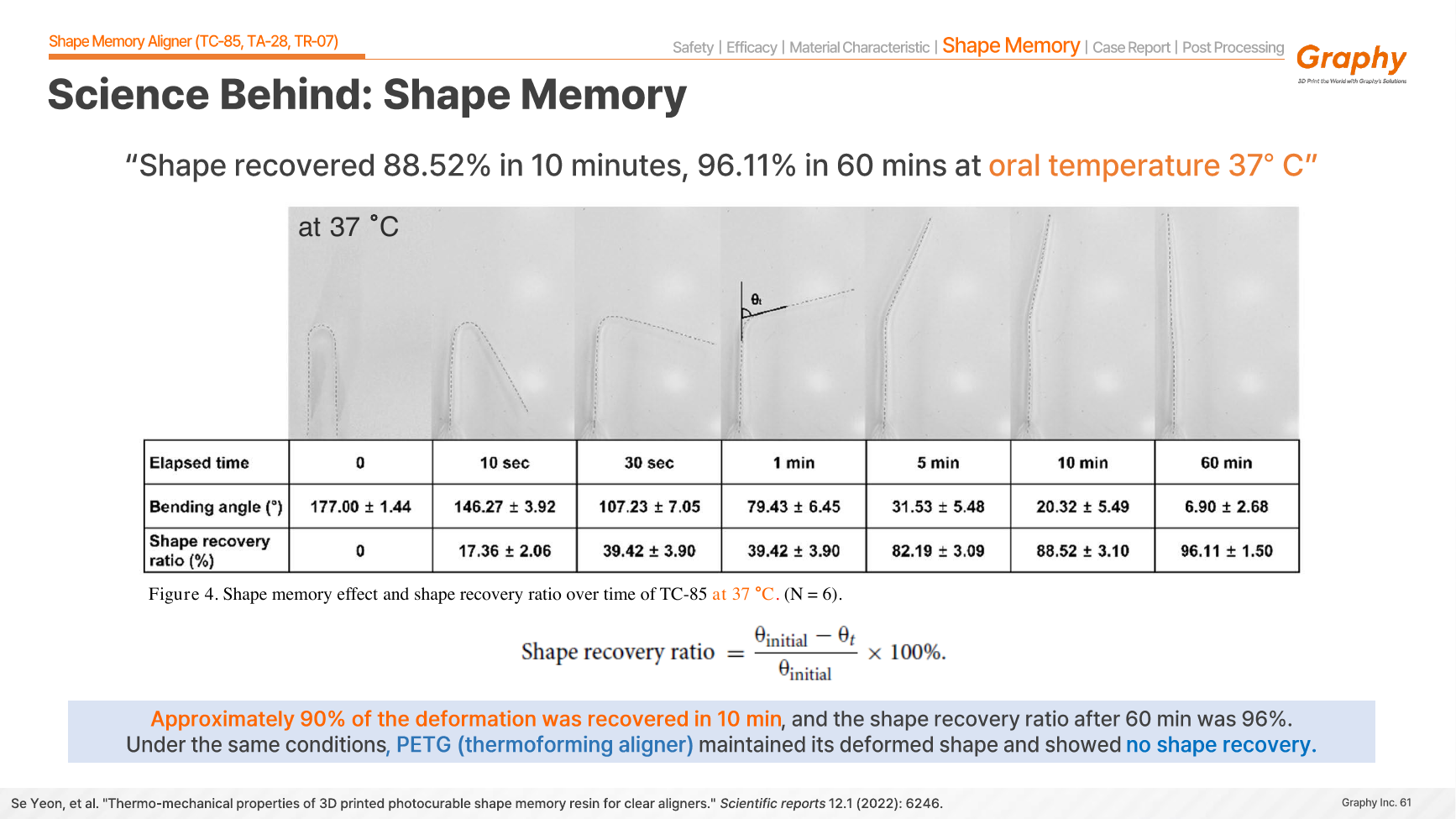
Why oral-temperature activation matters
The useful distinction is not simply that the polymer can change shape. It is that recovery is designed to continue in the temperature range where the aligner is actually worn.
- Warm-water flexibility can reduce the effort needed to seat a tight tray.
- Recovery toward the printed geometry generates the intended corrective action.
- Repeated-cycle testing in the Graphy summary supports recovery as a material property rather than a one-time event.
- Stage timing and warm-water instructions remain clinician controlled.
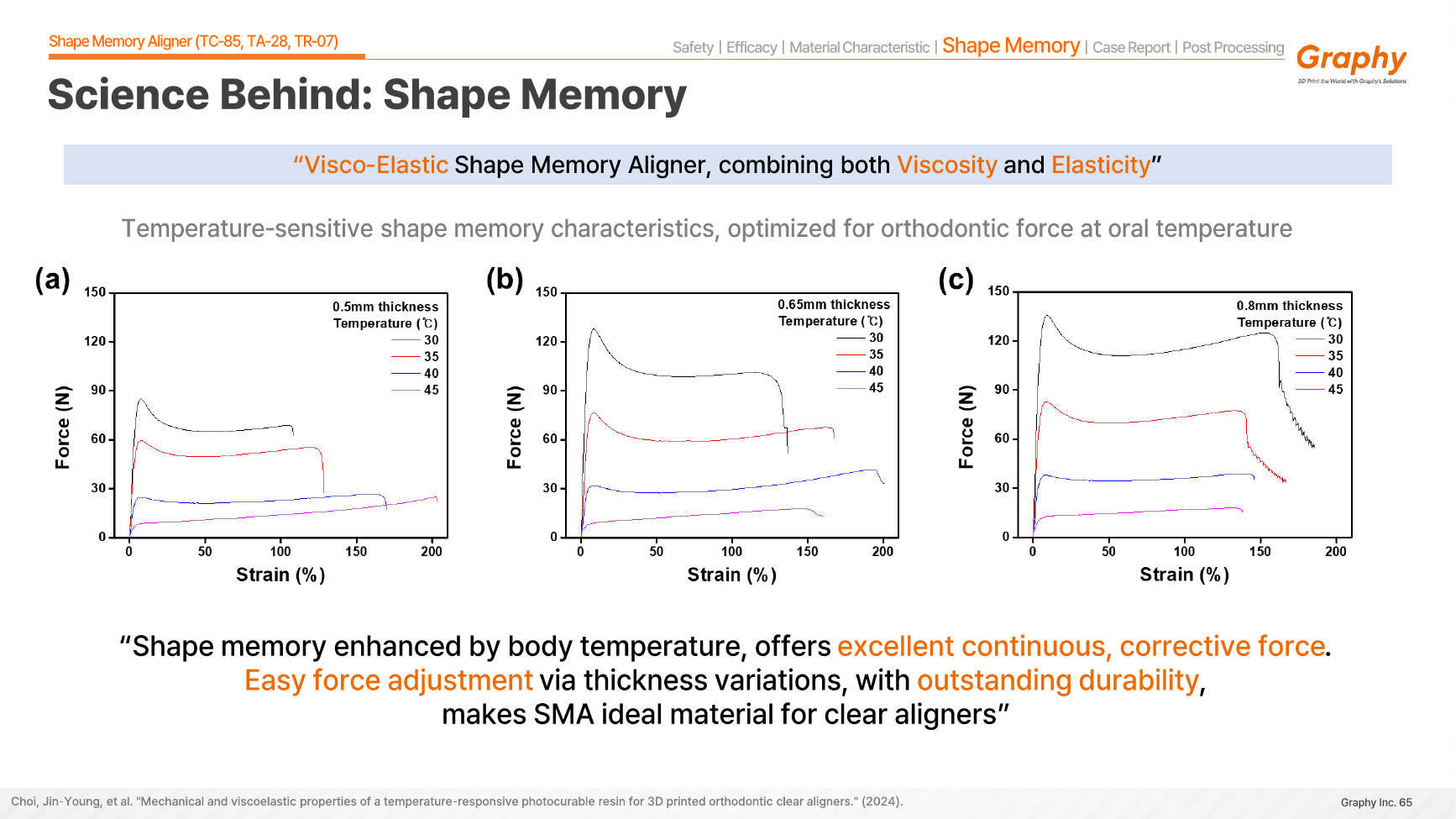
The appliance geometry becomes part of the force system.
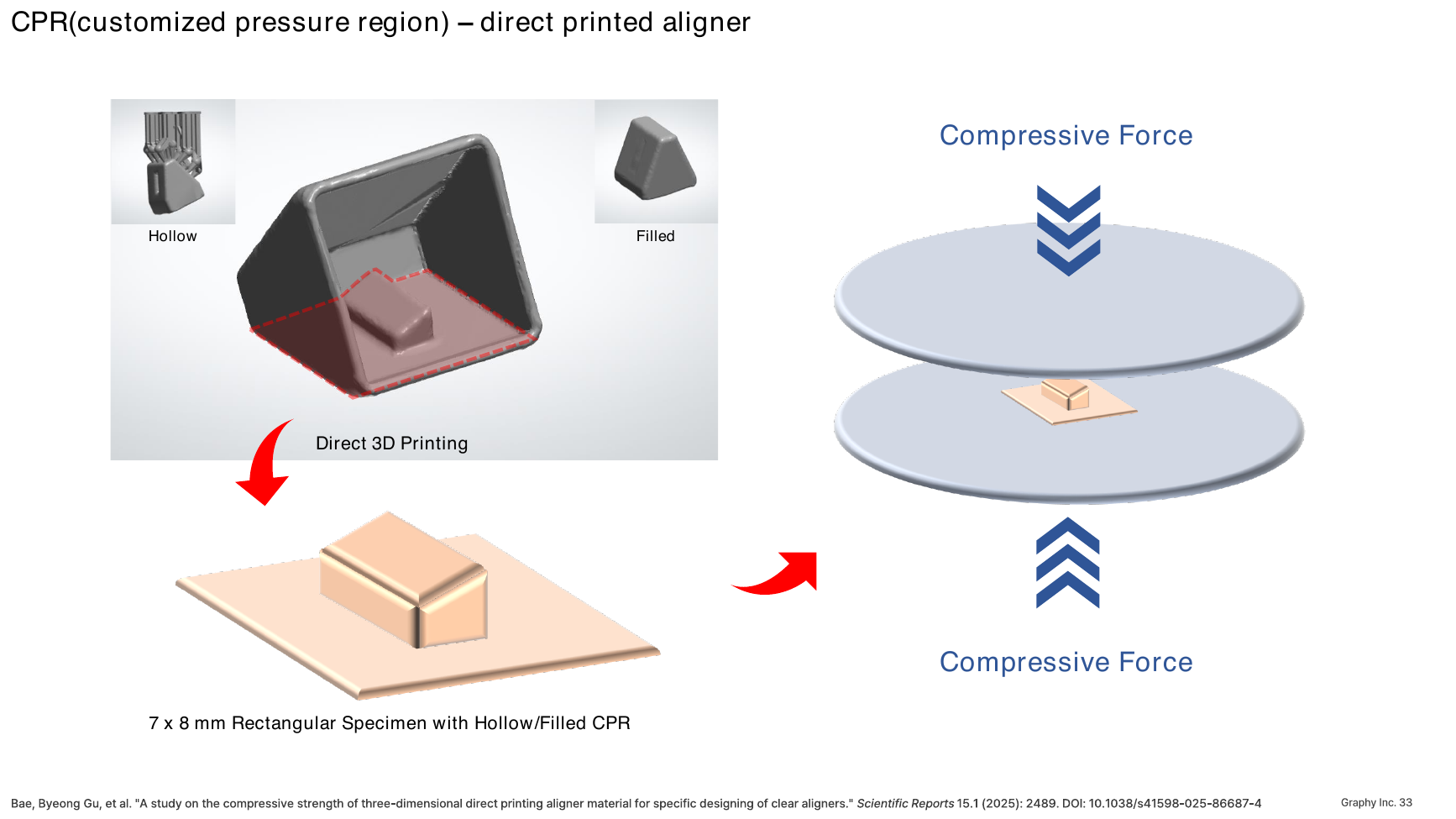
Direct printing allows local thickness, cutouts, trim lines, bite features and customized pressure regions to be designed into the appliance rather than inherited from a stretched sheet.
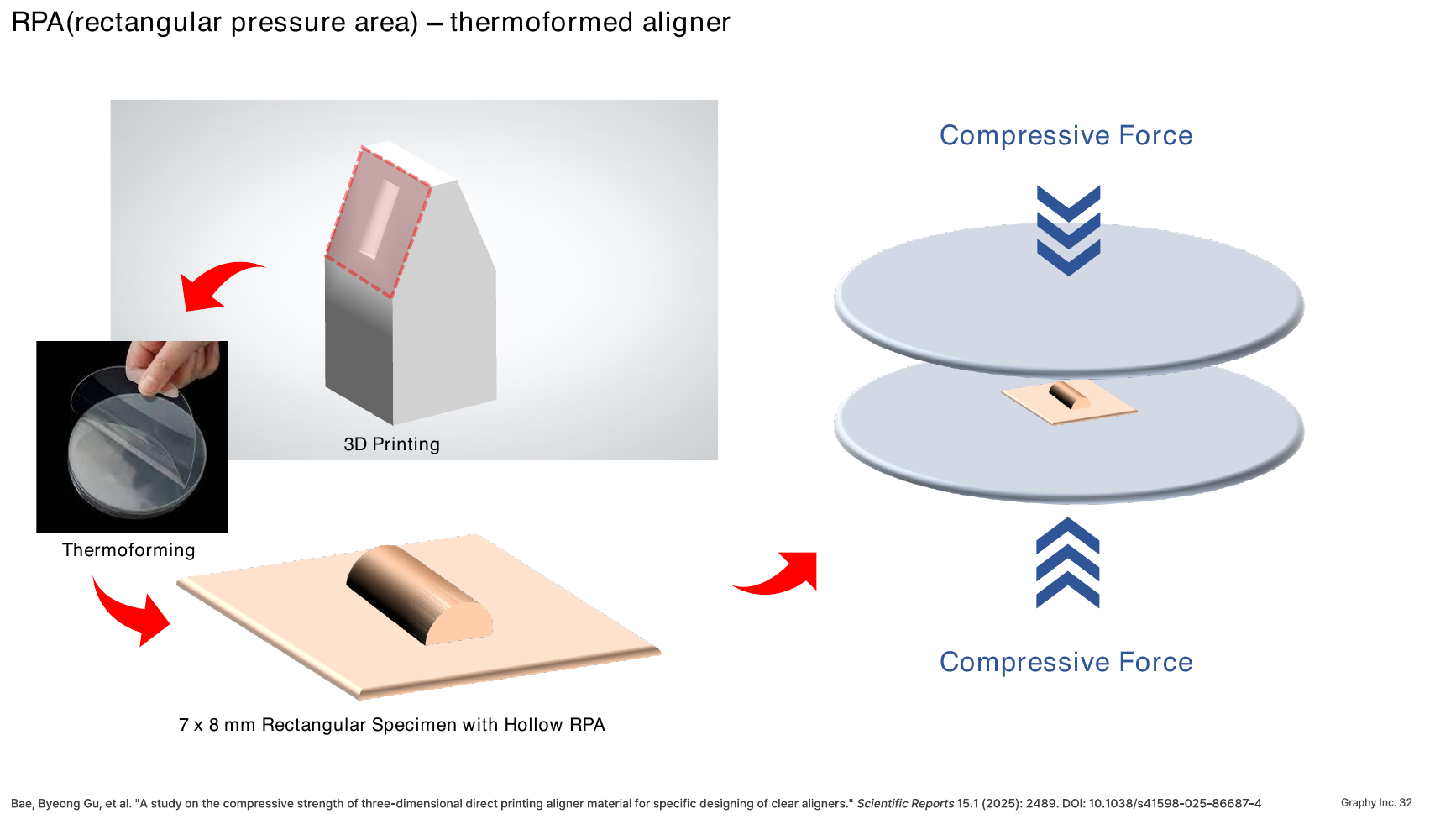
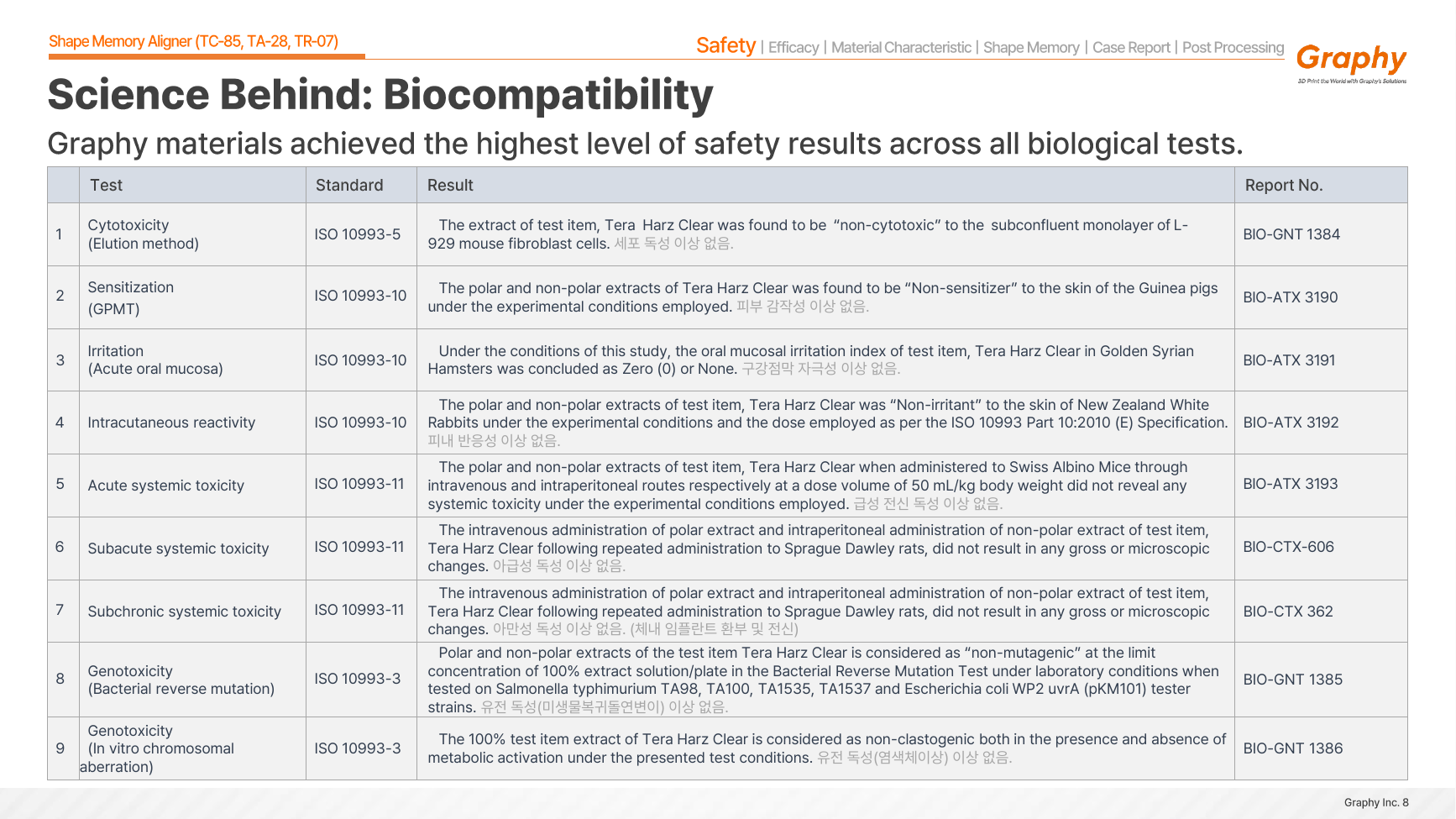
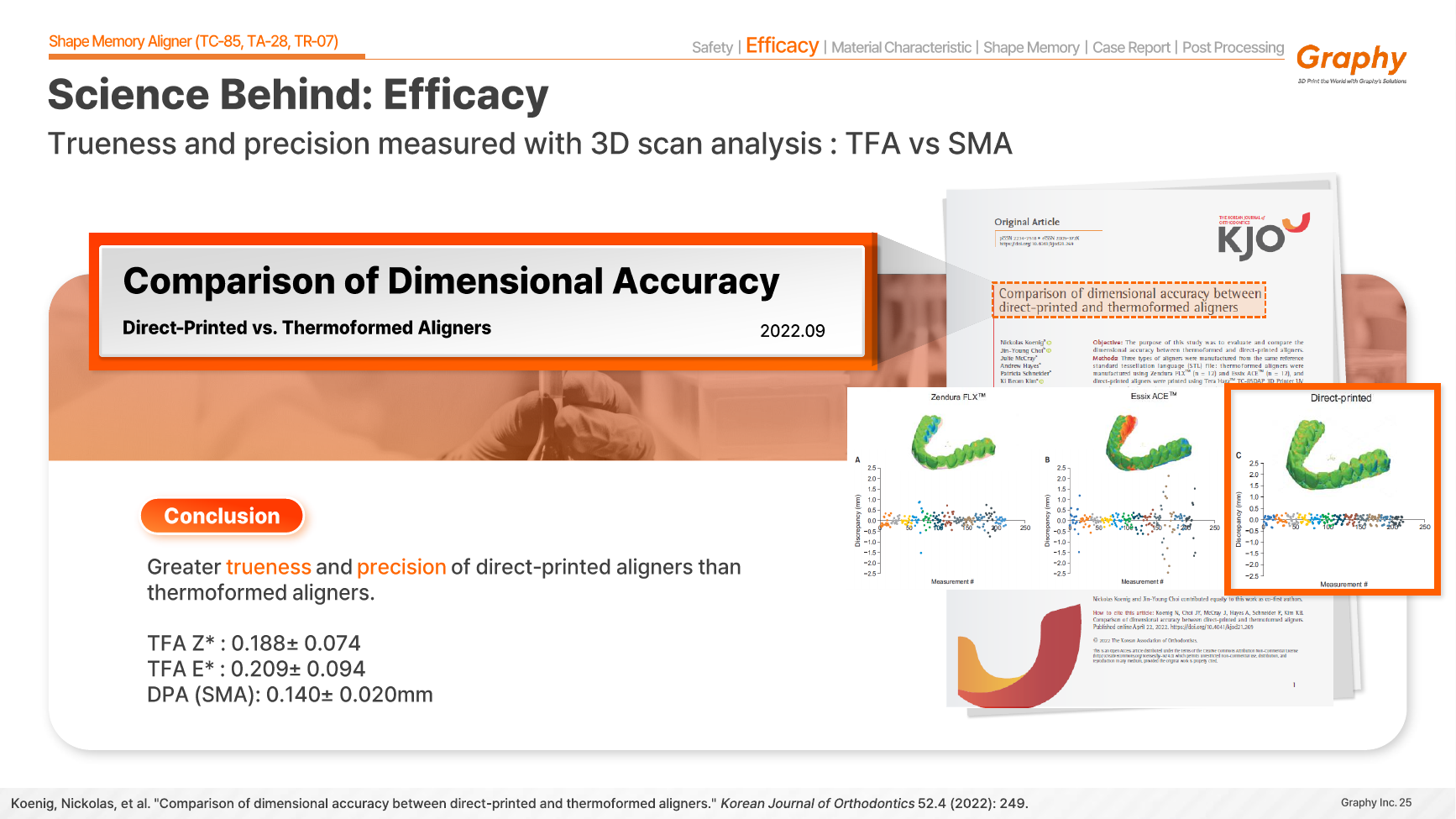
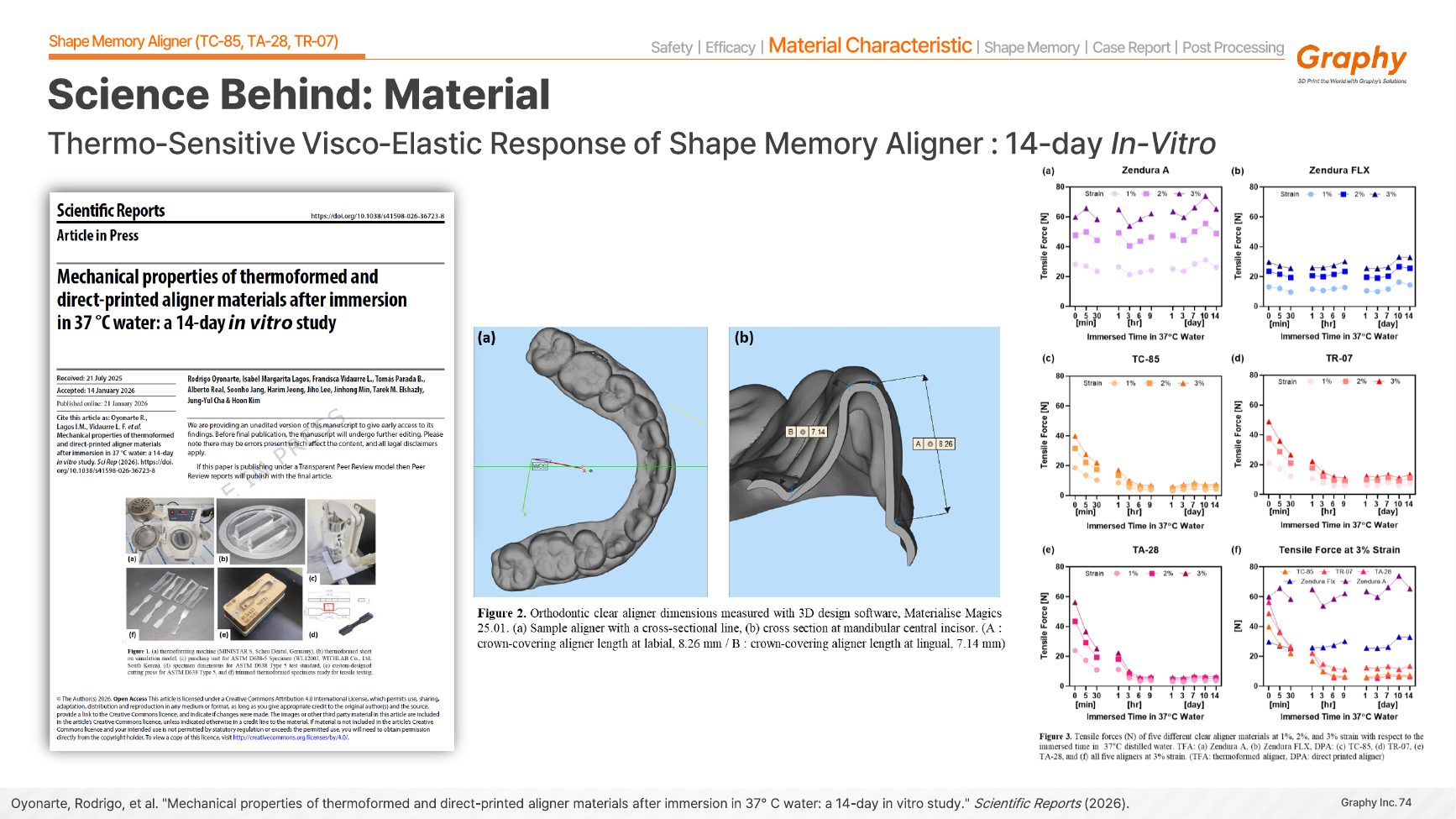
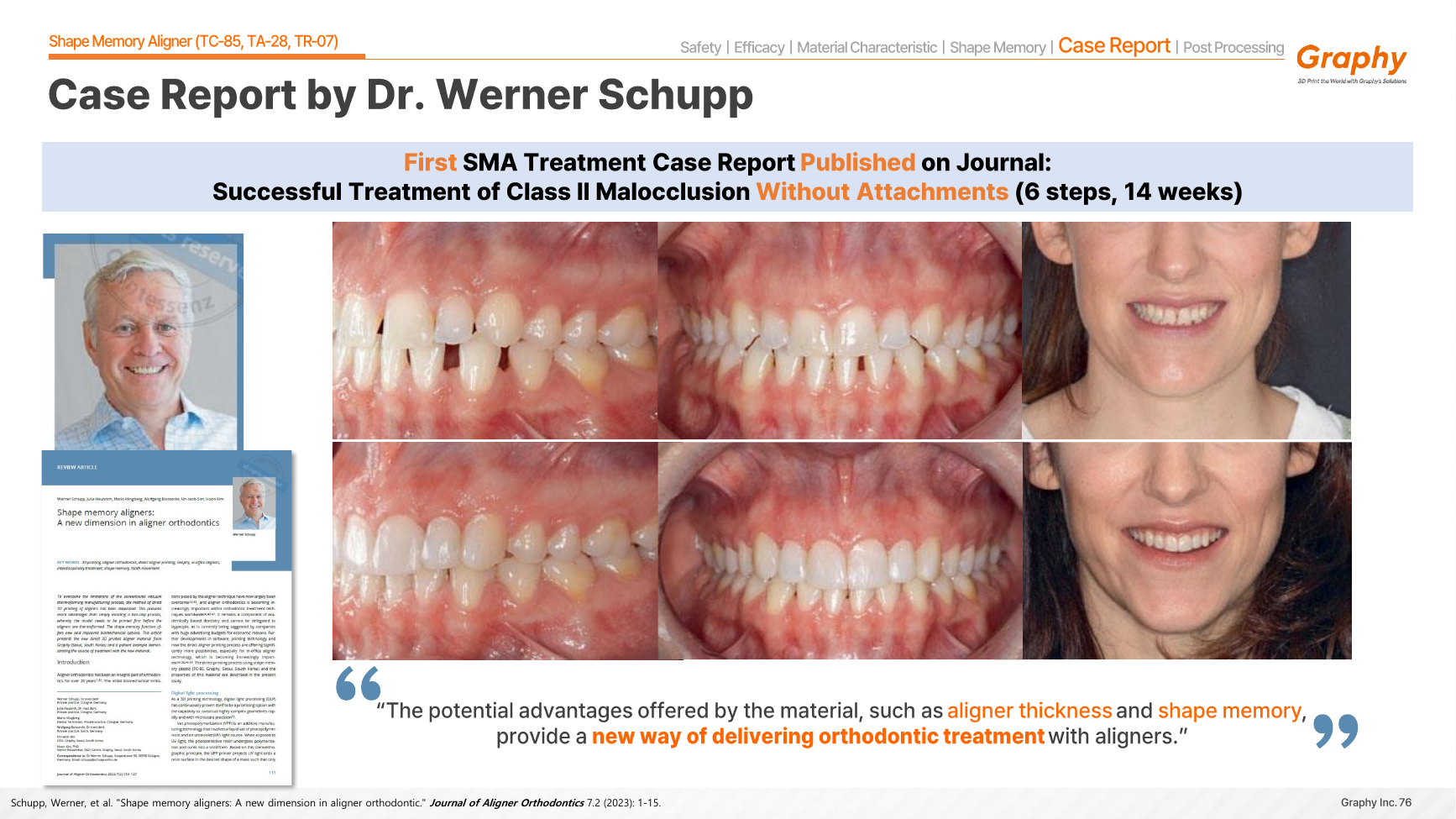
Evidence at three levels: fit, material stability and clinical use.
From approved digital plan to inspected appliance.
Direct printing removes model printing, block-out, thermoforming and border trimming from the conventional workflow. It does not remove the need for disciplined post-processing and clinical QC.
Scan, diagnosis, staging and appliance design reviewed by the treating clinician.
Aligners printed from the approved digital appliance geometry.
Validated post-processing controls polymerization and finished material behaviour.
Supports, edges, clarity, fit and batch records checked before release.
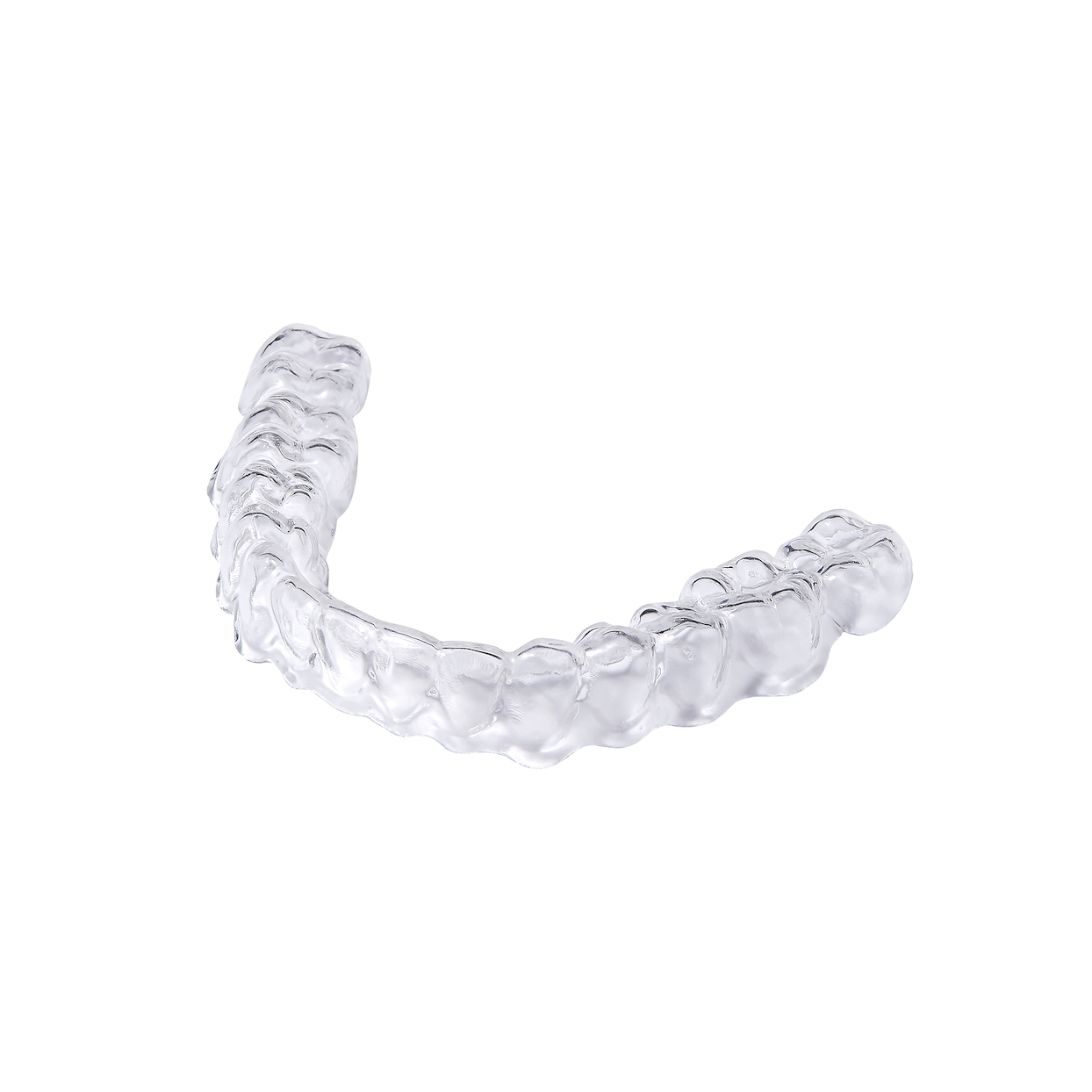
The approved aligner geometry is printed directly. Supports are removed during the controlled finishing workflow.
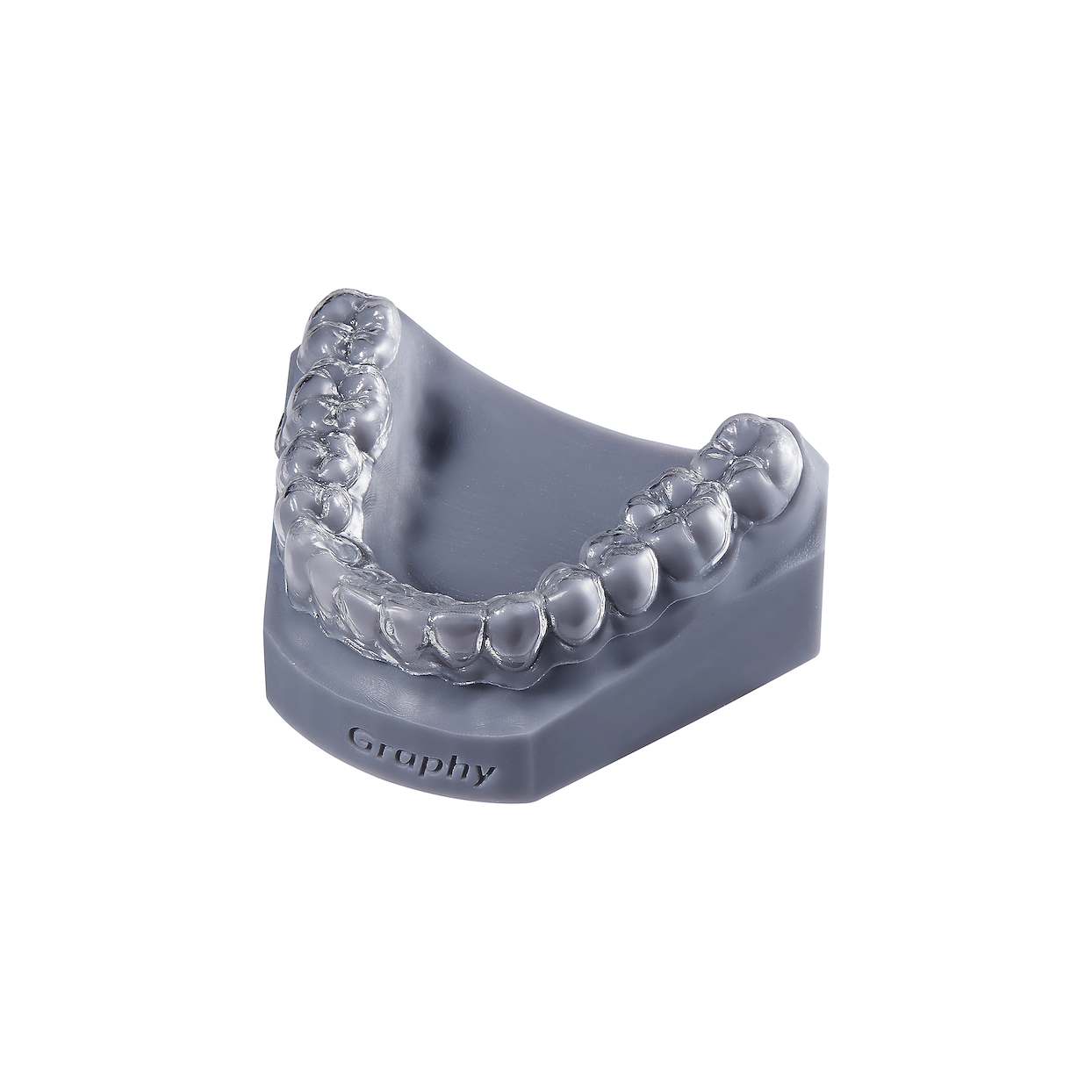
The finished appliance is checked for clarity, edges and fit before release to the treating clinic.
D4 Dental Lab, Dubai
Office 303, Ahli House C, Al Nahda 2, Dubai. Monday-Saturday, 9:00 AM-6:00 PM.
SmartAligners coordinates local production through D4 after clinician approval of the digital plan. The laboratory workflow covers direct printing, controlled post-processing, finishing and release checks.
+971 4 344 5466
Discuss a case or bringing SmartAligners into your clinic.
Tell us whether you are reviewing a patient case, the clinical workflow, production, training or commercial onboarding. Your message is sent to the SmartAligners clinical team, separately from patient scan requests.
[email protected]Clinical enquiry received
The SmartAligners clinical team will reply using the contact details provided.