Smart Aligners - Powered by Graphy Smart Aligners - Powered by Graphy
The next generation of clear aligners

Clear aligners. Smarter. Faster.

SmartAligners are next-generation removable clear aligners that gently guide teeth through a dentist-planned sequence. Each aligner is created from your digital scan and 3D-printed directly in its final shape.

Suitable plans can start from 4-6 months.

Published ranges are context, not a head-to-head trial or an individual promise. Your scan, case complexity and wear determine your timeline.

Published treatment ranges See the time difference
SmartAligners Lite4-6 months
SmartAligners Advanced7-10 months
Typical clear-aligner guidance12-18 months
Directly 3D-printedMade in its final planned shape Shape-memory materialDesigned to recover at mouth temperature From 4-6 monthsFor suitable Lite plans
What clear aligners can do

Move teeth without metal braces.

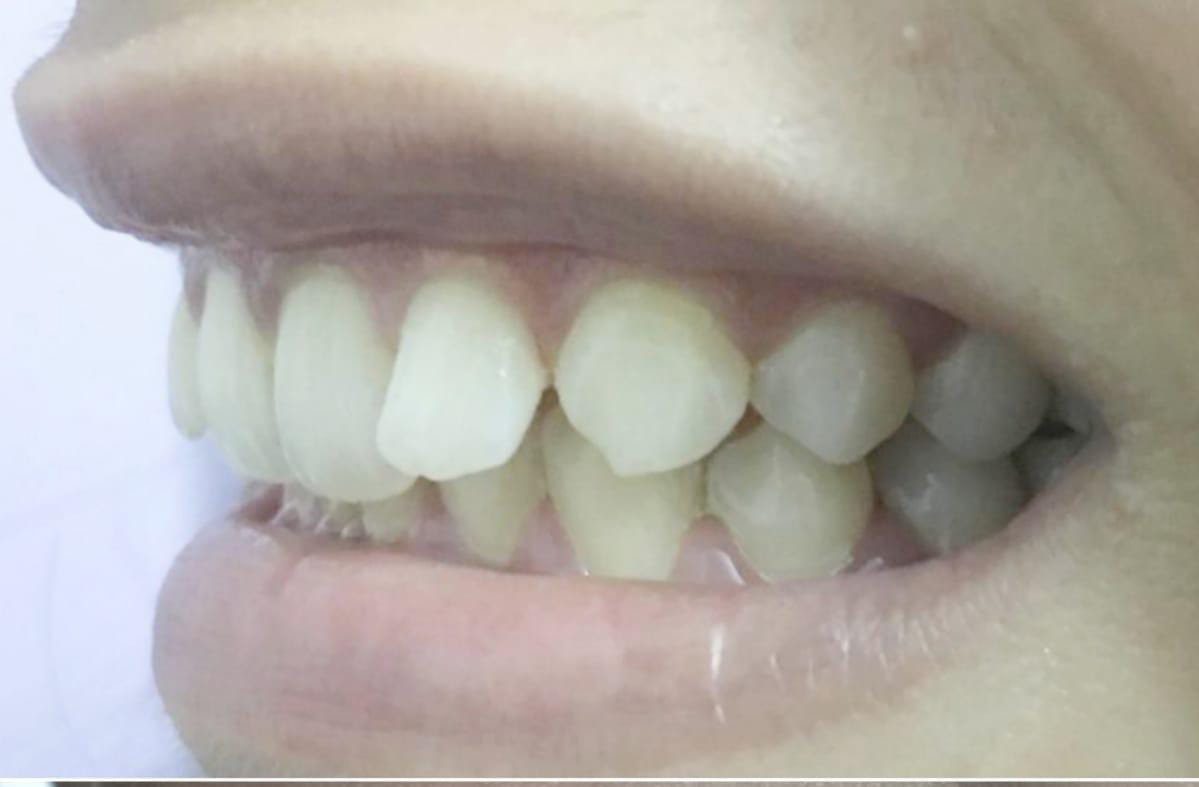
Clear aligners apply planned, gentle pressure as you progress through each stage. A dentist checks your teeth, bite and gum health before confirming whether treatment is right for you.

Check whether clear aligners could suit you
01Crowded teeth
02Spaces and gaps
03Teeth that moved after braces
04Selected bite problems
Why the workflow can be shorter

Fewer production steps. A material designed to keep working.

Faster manufacturing does not make teeth move instantly. It gives your clinician a more direct production route, while the shape-memory material is designed to recover toward its printed geometry at mouth temperature.

01

Print the appliance directly

The workflow removes physical model printing, block-out, thermoforming and model-side trimming from each stage.
02

Recover at mouth temperature

Graphy's shape-memory polymer is designed to return toward its printed form at approximately 37°C.

03

Follow a staged clinical plan

Your dentist approves the sequence, monitors tracking and adjusts the plan when your biology or fit requires it.

04

Warm briefly for easier seating

Clinician-guided warm water temporarily increases flexibility, helping the aligner settle over crowded or sensitive areas.

Review the material evidence and references
See the process

01 / 05

First, your smile becomes data.

A hand-held intraoral scanner captures the real position of crowded teeth and your bite. Rotate the model while the scan beam builds the digital surface.

Then every movement is planned.

Your clinician compares the crowded starting position with the intended alignment, then divides that movement into controlled stages.

The aligner is printed directly.

The transparent appliance is built from the approved geometry, then cleaned, nitrogen-cured, finished and quality checked. No model-forming stage is required.

Warm briefly. Seat more easily.

Graphy's patient guide shows approximately 42-55°C for up to about one minute. This clinician-guided warm-water step makes the aligner temporarily more flexible before it settles over the current tooth position and recovers at mouth temperature.

Each stage guides the next movement.

The aligner applies the planned force while your clinician checks tracking. The demonstration shows the principle, not a prediction of an individual result.

Anatomical scan: NIH 3D, Public Domain
Digital scan0%

Drag anywhere on the model to inspect it from another angle.

Real treated case

Now see a real change.

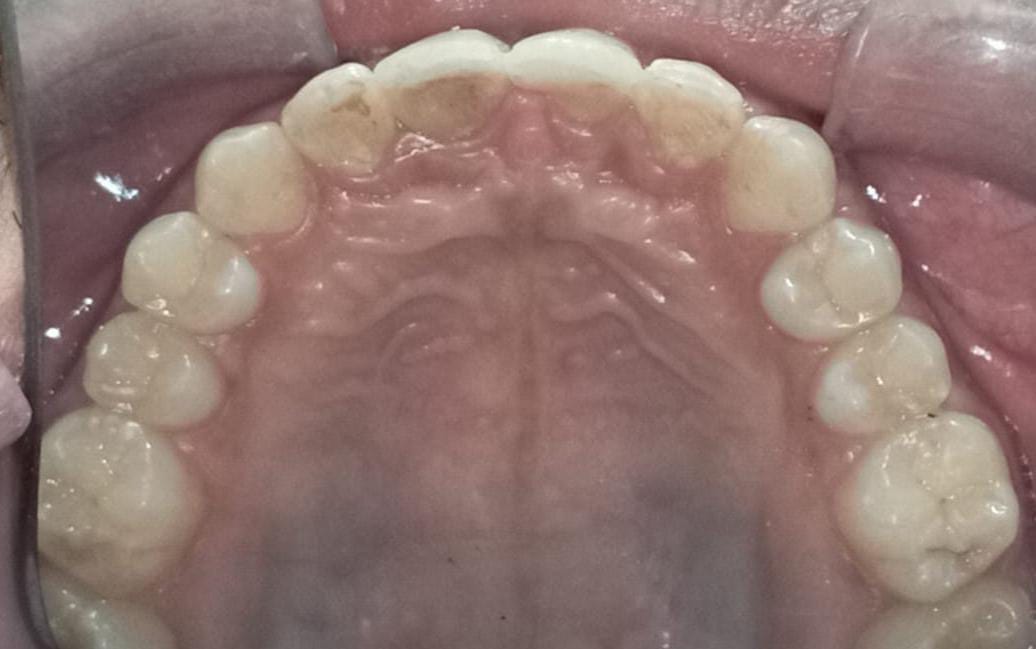
Move the divider to compare the same upper arch before and after treatment.
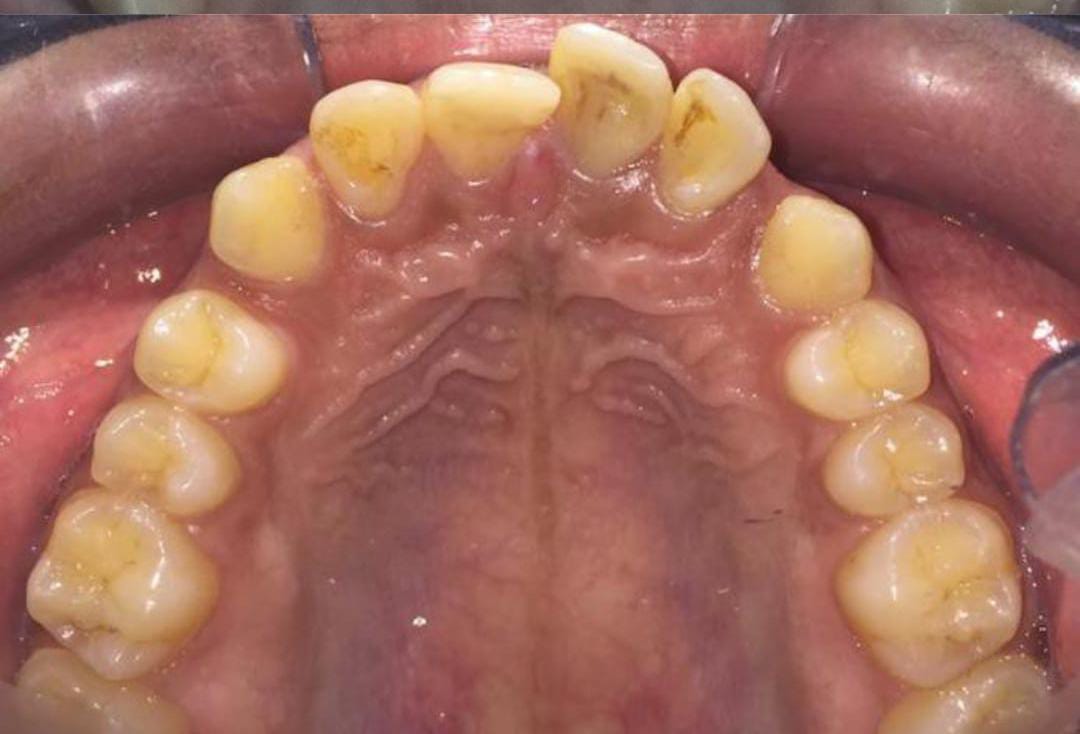
Upper archDrag the handle
Upper arch before aligner treatmentBefore
Upper arch after treatmentAfter

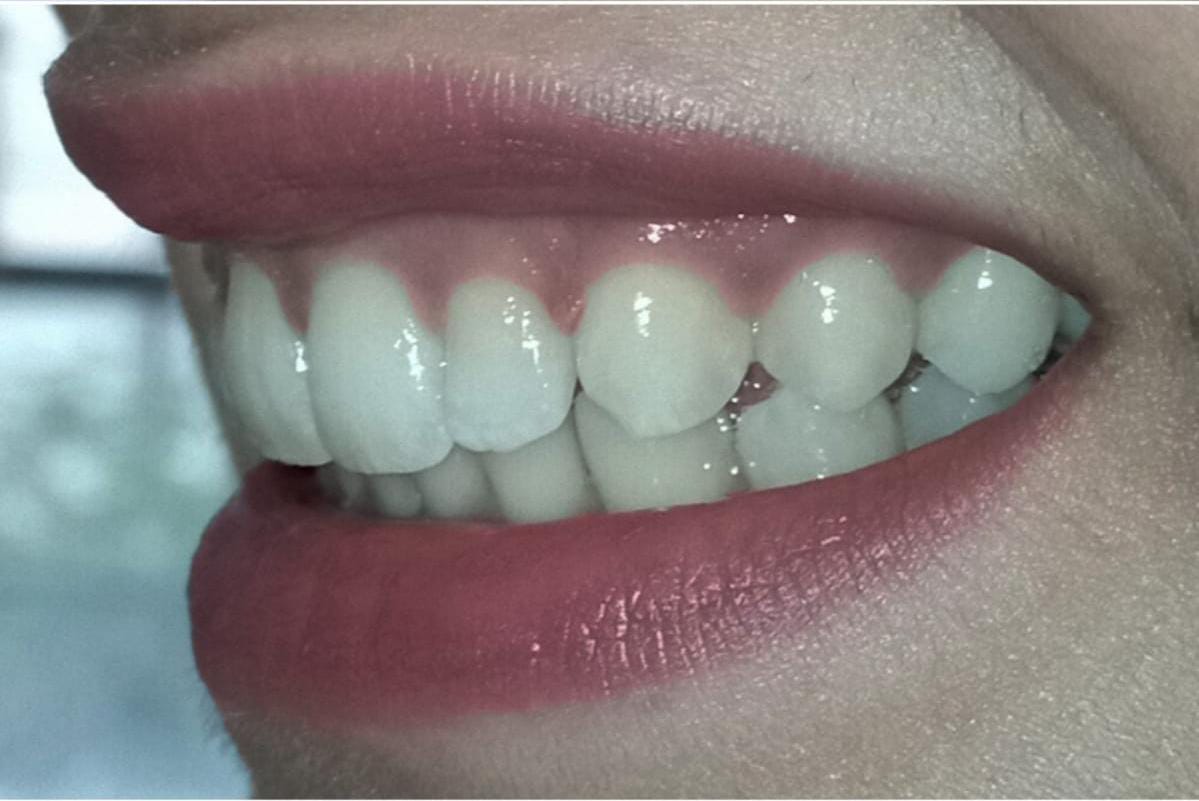
Clinical photographs from one treated case. Results and treatment time vary; suitability must be assessed by a dentist or orthodontist.

The Treatment Flow

A realistic treatment timeline.

Exact timing depends on your scan, crowding, bite, gum health, and how consistently you wear the aligners. Start with the published ranges, then let your clinician confirm the plan for your case.

Day 0

3D Scan & Suitability Check

Visit a partner clinic for an intraoral scan and doctor assessment. The scan checks crowding, bite, gum health, previous orthodontic work, and whether aligners are suitable.

Appointment usually takes 20-40 minutes
Usually 2-5 working days

Plan, Stage Count & Price

Your clinician reviews the digital plan, likely number of stages, case complexity, attachments or pressure zones, expected wear schedule, and price before you proceed.

Timeline confirmed after clinical approval
Around 1-2 weeks after approval

Direct Printing & QC

Your aligners are printed directly, washed, cured, finished, checked, and prepared for fitting. Cases can be produced in checkpointed batches instead of printing the whole journey blindly.

Manufacturing time depends on case and batch size
7-14 days per stage

Wear, Warm, Review

Wear is typically 20+ hours per day, with 22 hours ideal. Early stages may change weekly; later or more complex movements can use 10-14 day steps. Your doctor adjusts the schedule if tracking, comfort, or hygiene needs it.

Your doctor sets review intervals and wear schedule
Consultation Booking

Schedule Your Free 3D Scan

Take the first step toward a digital scan at an authorized clinic near you. While the UAE call line is being connected, requests are confirmed through WhatsApp and email.

Request Received!

Thank you. A clinical coordinator from our partner clinic in your selected Emirate will reach out via WhatsApp or email within 24 hours to confirm your free 3D scanning appointment.

We will contact you via WhatsApp
Common Queries

Frequently Asked Questions

The questions patients ask most often about comfort, timing, safety, daily wear and suitability. Clinicians can review the full evidence centre.

SmartAligners are clear, removable aligners powered by Graphy's Tera Harz shape-memory material. They are planned digitally, printed directly as aligners, and fitted under dentist or orthodontist supervision.
Graphy is a South Korean dental-materials and 3D-printing company that developed Tera Harz Clear, the directly printable shape-memory resin used for SmartAligners. SmartAligners UAE provides the local patient, clinical and production workflow; Graphy supplies the underlying material technology.
Standard aligners are usually made by stretching a heated plastic sheet over a printed model. SmartAligners are printed directly as the planned aligner, which allows more control over thickness, pressure regions, trim lines, and the warm-seat-recover behaviour.
Graphy's patient instructions show approximately 42-55°C for the warm-water step, for up to about one minute. This temporarily makes the aligner more flexible so it can seat over tight areas more easily. Once it is in your mouth, the material is designed to recover toward the printed shape at oral temperature. Follow your clinician's exact temperature and timing instructions for your aligner.
Graphy lists 4-6 months for Lite packages and 7-10 months for Advanced packages. These are case ranges, not a promise. Direct printing can remove production steps and the material is designed to maintain controlled force, but treatment speed still depends on biology, complexity, wear time, hygiene, and clinical review. There is not yet enough high-quality head-to-head evidence to guarantee that every case finishes faster than another aligner brand.
Some pressure is normal whenever teeth are moving. The aim is not "no feeling"; the aim is controlled, gentle force. Warm seating may make insertion easier, especially when a new aligner would otherwise feel tight.
Plan for at least 20 hours per day, with 22 hours ideal for many cases. Remove them for meals and brushing unless your clinician gives different instructions.
Many early stages use roughly 7-day changes. Later stages or larger movements may need 10-14 days. Your dentist or orthodontist sets the interval based on movement type, fit, tracking, comfort, and compliance.
Usually no. Remove aligners for meals unless your clinician gives different instructions. Eating with aligners can affect fit, hygiene, and the chance of damage. Brush or rinse before putting them back in.
Clean the aligner gently with running water and a soft toothbrush or approved aligner cleaner, then store it in its case when not wearing it. Do not invent your own hot-water routine; warm-water use must follow the exact temperature and timing your clinic provides.
Stop forcing it and contact your clinic. Fit issues can come from missed wear time, seating problems, heavy bite forces, eating with the aligner in, or a manufacturing/post-processing issue. Your clinician will tell you whether to continue, step back, replace, or adjust the aligner.
Graphy documentation lists ISO 10993 testing across cytotoxicity, sensitization, oral mucosa irritation, intracutaneous reactivity, systemic toxicity, and genotoxicity. The finished aligner still needs correct printing, washing, curing, finishing, and clinical inspection before patient use.
Some cases may need fewer visible attachments because pressure features can be designed into the aligner itself. That does not mean attachments are never used. Your dentist decides based on the movement required.
It may be suitable for many crowding, spacing, relapse, and selected bite cases, including some crossbite, deep bite, and open bite situations. Suitability depends on diagnosis, gum health, bite, root position, patient compliance, and whether the doctor believes aligners are the right tool.
Not automatically. IPR and extractions are clinical decisions, not default website promises. The Graphy protocol can prioritize staged distalization where appropriate, but your dentist must decide what is safe and realistic for your bite.
Direct-printed aligners should go through controlled production and inspection: print, wash, cure, finish, check clarity and fit, then deliver with instructions. Cases can be produced in batches so the team can review progress before continuing the full set.
The supplied Graphy science summary references peer-reviewed work on shape-memory aligners, direct-printed clear aligners, retreatment after fixed-retainer failure, direct-printed aligner clinical status, and a 12-month evaluation of directly printed aligner therapy. Providers should review the papers and validate protocols locally before adoption.
The clinical idea is light, sustained, targeted force through a shape-memory material and customized pressure regions. Graphy documentation contrasts this with thermoformed rectangular pressure areas, where stretching a sheet over a model can produce less tailored pressure distribution.
The important controls are validated printer settings, washing, curing, humidity and temperature discipline, support removal, polishing, clarity checks, fit checks, and patient instructions. Material science alone is not enough; the production protocol has to be consistent.
A 2024 Journal of Dentistry study referenced in the Graphy summary reported favourable surface, cell-viability, and bacterial-adhesion findings for the Tera Harz group among tested 3D-printed materials. Patients still need excellent cleaning habits because plaque control depends heavily on daily hygiene.
Possibly. The supplied Graphy science summary references a published retreatment case after fixed-retainer failure. A clinician still needs to check gum health, tooth movement limits, and whether the retainer should remain, be adjusted, or be replaced.
No system should promise that. Direct printing and checkpointed batches may reduce avoidable fit issues, but teeth are biological and patients wear aligners differently. If tracking is not right, your doctor may request adjustments, extra aligners, or a revised plan.
Thermoformed workflows usually need a model for each stage, block-outs, sheet forming, trimming, and finishing. Direct printing skips the model-forming step and produces the aligner from the digital appliance design, which can reduce handoffs and waste when the production workflow is well controlled.
SmartAligners is being built around UAE partner clinics, Dubai-based coordination, and local support. Exact clinic pins and the UAE call line are being finalized, so booking requests are currently confirmed through WhatsApp and email.
The main sustainability advantage is practical: direct printing avoids a physical model for every aligner stage and reduces thermoforming/trimming waste. We are not calling the treatment carbon-neutral on this site unless the team provides a formal audited claim.
Transform Your Smile Free 3D Scan & Consultation
Book Free Scan